
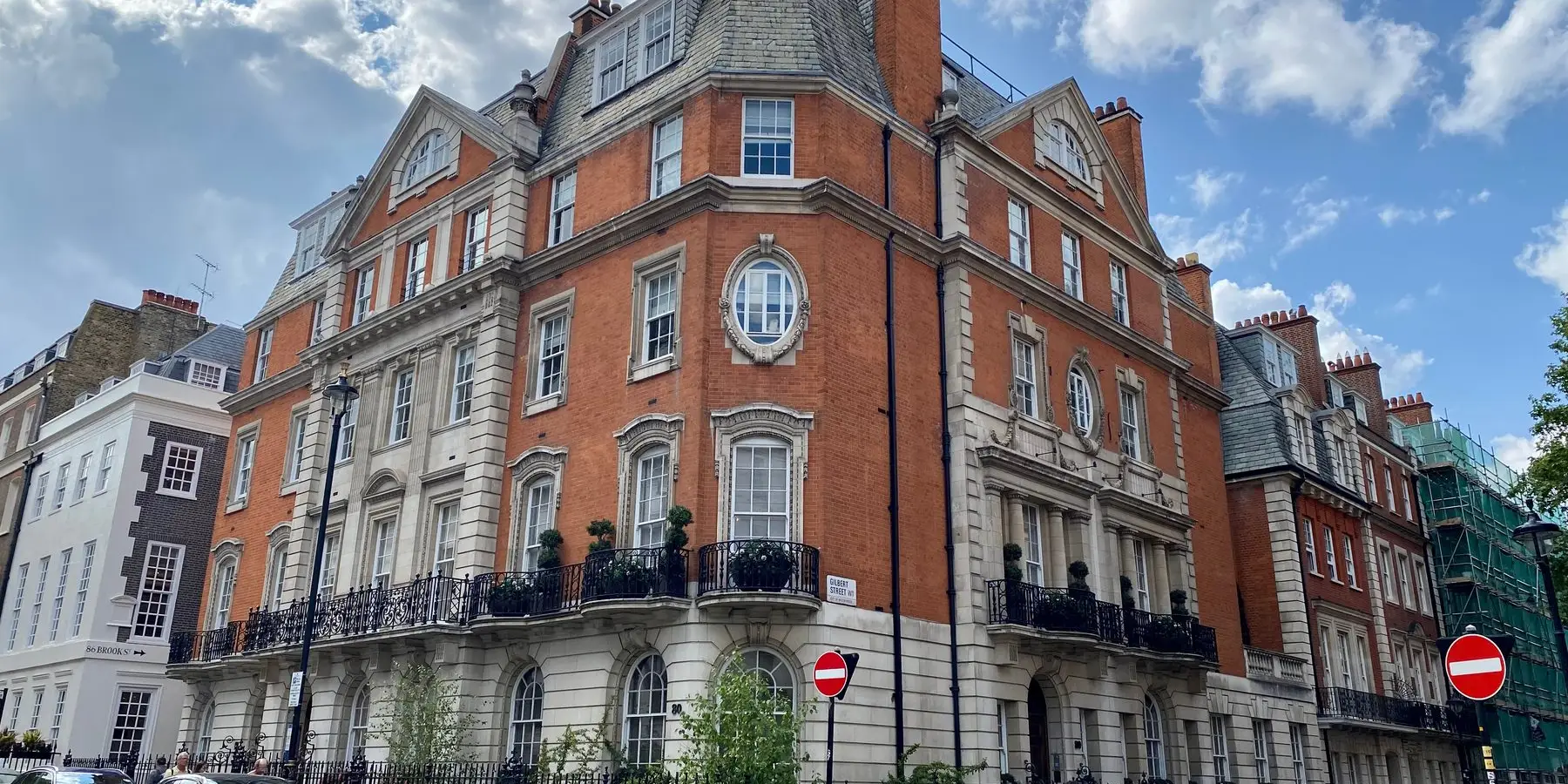
High-value and international transactions follow the same basic steps as any other purchase or sale, but they raise questions that a volume conveyancing service is not set up to answer: how the property should be owned, which Stamp Duty Land Tax surcharges apply, how documents can be signed from abroad, and what the money laundering checks will require. We have acted for overseas clients and investors from our Mayfair office for many years.
Prime central London property
Many central London homes are held on long leases from the great estates, with estate management schemes, restrictions on use and alterations, and licence requirements that need careful review. Houses may be listed or in a conservation area, and the leasehold title of a flat may be one of several in a building with a complex structure of headleases. We review all of this before you commit, and our lease extension and freehold acquisition teams can advise on the value of enfranchisement rights.
Overseas and non-resident buyers
- Identity and source of funds. Expect detailed questions about where the purchase money has come from. We tell you at the outset exactly what we need, and accept certified, notarised or apostilled documents where you cannot visit us in person.
- Signing from abroad. Our notaries can advise on signing documents overseas, and on powers of attorney where you cannot be available for exchange or completion.
- The non-resident surcharge. Buyers who have not spent at least 183 days in the UK in the 12 months before completion pay an extra 2% Stamp Duty Land Tax on top of all other rates. If you then spend 183 days in the UK in any continuous 365-day period within the year either side of completion, you can claim the surcharge back within two years of completion.
- Overseas property counts. For the 5% additional dwellings surcharge, homes you or your spouse own anywhere in the world are taken into account, not just in the UK. Combined with the non-resident surcharge, the top marginal rate for a non-resident buying a second home is 19%.
Buying through a company or trust
- Companies. A company buying a dwelling for more than £500,000 pays Stamp Duty Land Tax at a flat 17% of the whole price (19% if the company is non-resident) unless a relief applies, for example for a genuine property rental business. Residential property owned by a company may also be subject to the Annual Tax on Enveloped Dwellings.
- Overseas entities. An overseas company buying UK land must be registered on the Register of Overseas Entities at Companies House before it can be registered as the owner at HM Land Registry.
- Trusts. Whether the trustees or a beneficiary are treated as the buyer for Stamp Duty Land Tax depends on the type of trust, and the answer affects whether the surcharges apply.
We have written about de-enveloping residential property held in an overseas company and selling UK residential property as an overseas company.
The annual cost of owning a high-value home
From April 2028 the government intends to charge a High Value Council Tax Surcharge on homes in England worth £2 million or more, in addition to ordinary council tax. Owners of high-value homes should factor this into their plans, along with service charges, ground rent and, for companies, the Annual Tax on Enveloped Dwellings.
Our fees
Our fees for high-value transactions, including worked examples for properties at £2 million and above, are published on our residential conveyancing fees page alongside our standard fees.